
Silence can communicate powerful emotions, create suspense, and set the mood for a memorable scene. Similes for silence help writers describe quiet moments in vivid and imaginative ways by comparing silence to familiar objects, peaceful settings, or mysterious situations. Whether you are writing a story, poem, essay, speech, or everyday conversation, these creative comparisons can make your descriptions more expressive and engaging. From silence as soft as falling snow to quietness as deep as a moonlit lake, you’ll discover unique examples, simple meanings, and practical writing tips to help you use similes naturally and bring your words to life.
Definition of Similes for Silence
Similes for silence compare a person, place, object, or situation as quiet or soundless using words like “like” or “as.”
For example, instead of writing, “The room was silent,” you could write, “The room was as silent as a deserted library.” The comparison creates a stronger mental image and gives the reader a better sense of the atmosphere.
What Is a Simile?
A simile is a figure of speech that compares two different things using words such as like or as. Writers use similes to make descriptions clearer, more colorful, and easier to imagine.
Example
- The classroom was as silent as a sleeping forest.
- She stood like a statue in the empty hallway.
- His voice disappeared like a whisper in the wind.
- The lake was as quiet as glass at midnight.
- The house sat silently like an abandoned theater.
A strong simile usually creates a recognizable image while adding emotion or atmosphere. Writers often use this technique to make abstract or difficult-to-describe feelings easier for readers to understand.
Why Use Similes for Silence in Writing?
- Create vivid imagery: A comparison helps readers visualize silence instead of simply reading the word “silent.”
- Show emotion: Silence can suggest fear, sadness, peace, tension, loneliness, or respect.
- Build atmosphere: A quiet setting can feel peaceful, mysterious, eerie, or dramatic depending on the comparison.
- Make writing memorable: Creative comparisons stand out more than plain descriptions.
- Improve storytelling: Silence can become an important part of a scene rather than just background information.
- Add personality: A humorous comparison can make silence feel playful, while a darker comparison can make it feel threatening.
- Strengthen poetry: Similes connect sound, nature, emotion, and imagery compactly.
- Avoid repetition: Instead of repeatedly using “silent” or “quiet,” writers can introduce fresh descriptions.
Types of Similes
Similes for silence can create different effects depending on the image used for comparison. Some focus on peaceful silence, while others emphasize fear, mystery, loneliness, or dramatic tension.
Peaceful Similes

Peaceful similes compare silence with calm natural scenes, gentle spaces, or relaxing moments. They work especially well in descriptive writing and poetry.
Example
- The garden was as silent as dawn before the birds began singing.
- The lake rested like a sleeping mirror beneath the moon.
- The room was as quiet as a snow-covered field.
- The child slept like a cloud drifting through a dream.
Eerie Similes
Eerie similes make silence feel unsettling, strange, or frightening. They work well in mysteries, thrillers, ghost stories, and suspenseful scenes.
Example
- The hallway was as silent as a graveyard after midnight.
- The abandoned house stood like a forgotten tomb.
- The forest waited like a predator holding its breath.
- The empty street felt as quiet as a town after a storm.
Emotional Similes
Emotional similes connect silence with sadness, loneliness, longing, or emotional distance.
Example
- Her silence hung like a heavy curtain between them.
- His words vanished like footprints in fresh snow.
- The empty chair felt as silent as an unanswered goodbye.
- Their friendship became as quiet as a fading song.
Dramatic Similes
Dramatic similes use silence to create suspense, anticipation, or a powerful pause.
Example
- The crowd became as silent as a theater before the final scene.
- Everyone froze like statues waiting for the verdict.
- The battlefield became as quiet as the moment before thunder.
- The room held its silence like a secret waiting to escape.
Writing Tips and Common Mistakes
Useful Tips
- Match the mood: Choose a peaceful comparison for calm scenes and a darker one for suspense.
- Use familiar images: Readers understand comparisons to snow, forests, libraries, lakes, and sleeping cities quickly.
- Choose specific imagery: “Silent as a sleeping forest” creates a stronger picture than “silent as something quiet.”
- Avoid unnecessary words: Keep your simile natural and easy to understand.
- Think about the senses: Silence can connect with sight, movement, atmosphere, and emotion, not only hearing. Auditory imagery focuses on how things sound or do not sound, while other sensory details can strengthen the scene.
- Keep the comparison relevant: The object you compare with should genuinely support the feeling of silence.
- Avoid clichés when possible: Original comparisons can make writing feel fresher and more personal.
- Use similes selectively: Too many comparisons in one paragraph can distract readers from the main idea.
Common Mistakes to Avoid
- Using a confusing comparison: “He was silent like a purple staircase” does not naturally communicate quietness.
- Mixing similes and metaphors: “The room was a sleeping forest” is a metaphor, while “The room was like a sleeping forest” is a simile.
- Overusing “as”: Not every phrase containing “as” forms a simile. The phrase must create a meaningful comparison.
- Using unrelated imagery: A comparison should help readers understand the silence rather than confuse them.
- Repeating the same image: Using “silent as the grave” repeatedly can make your writing feel predictable.
- Forcing a simile: If a simple sentence works better, do not add a comparison just to make the sentence sound fancy.
- Ignoring context: A peaceful comparison may weaken a scene that needs fear or tension.
- Making comparisons too complicated: Strong similes often use simple language and clear images.
50 Similes for Silent to Elevate Your Words
Silent as a Snow-Covered Forest
Meaning: Extremely quiet and peaceful, with no noticeable sound.
Detailed Explanation: This simile compares silence with a forest covered in fresh snow, where the soft landscape seems to absorb every sound. It works well for peaceful winter scenes.
Tone: Peaceful, serene, poetic
Examples:
- The village was as silent as a snow-covered forest before sunrise.
- The classroom became as silent as a snow-covered forest after the announcement.
- The garden felt as silent as a snow-covered forest beneath the moon.
Quiet Like a Sleeping Lake
Meaning: Completely calm and still.
Detailed Explanation: A sleeping lake suggests smooth water with little or no movement. This comparison works beautifully when you want silence to feel calm rather than frightening.
Tone: Calm, gentle, reflective
Examples:
- The room was quiet like a sleeping lake.
- Her thoughts became quiet like a sleeping lake after the argument.
- The park rested quietly like a sleeping lake beneath the stars.
Silent as an Empty Library
Meaning: Very quiet and undisturbed.
Detailed Explanation: Libraries are commonly associated with quiet surroundings, while an empty library makes the image even stronger. This simile works well for classrooms, offices, and public spaces.
Tone: Calm, familiar, peaceful
Examples:
- The office was as silent as an empty library.
- The hallway became as silent as an empty library after school.
- The house felt as silent as an empty library.
Quiet Like a Sleeping Child
Meaning: Soft, peaceful, and completely still.
Detailed Explanation: A sleeping child represents gentle silence without tension. It can describe a peaceful room, a quiet home, or a calm nighttime setting.
Tone: Tender, peaceful, warm
Examples:
- The house was quiet like a sleeping child.
- The village became quiet like a sleeping child after midnight.
- The room rested quietly like a sleeping child.
Silent as Moonlight
Meaning: Softly and completely quiet.
Detailed Explanation: Moonlight creates an image of stillness because it arrives without sound. This comparison gives silence a delicate and poetic quality.
Tone: Poetic, romantic, serene
Examples:
- The garden was as silent as moonlight.
- Her footsteps disappeared into a silence as soft as moonlight.
- The night wrapped the town in silence like moonlight.
Quiet Like Falling Snow
Meaning: Almost completely silent and gentle.
Detailed Explanation: Falling snow often creates an image of softness and stillness. This simile suits peaceful winter scenes and quiet emotional moments.
Tone: Gentle, peaceful, poetic
Examples:
- The room became quiet like falling snow.
- His voice faded into the air like falling snow.
- The evening settled over the village, quiet like falling snow.
Silent as a Locked Room
Meaning: Completely quiet and closed off.
Detailed Explanation: A locked room suggests both physical silence and emotional separation. It works particularly well when a scene feels isolated or secretive.
Tone: Mysterious, tense, isolated
Examples:
- The old house was as silent as a locked room.
- His thoughts remained as silent as a locked room.
- The hallway stood as silent as a locked room after midnight.
Quiet Like a Sleeping City
Meaning: Deeply quiet despite normally being busy.
Detailed Explanation: Cities usually contain traffic, voices, and movement. Comparing one to a sleeping city emphasizes how unusual and complete the silence feels.
Tone: Peaceful, cinematic, reflective
Examples:
- The streets were quiet like a sleeping city.
- The neighborhood became quiet like a sleeping city before dawn.
- The station felt quiet like a sleeping city during the holiday.
Silent as a Desert at Midnight
Meaning: Extremely still and free from noticeable sound.
Detailed Explanation: A desert at midnight creates an image of vast emptiness and deep stillness. It works especially well for lonely or dramatic scenes.
Tone: Lonely, mysterious, dramatic
Examples:
- The campsite was as silent as a desert at midnight.
- The valley looked as silent as a desert at midnight.
- After everyone left, the building became as silent as a desert at midnight.
Quiet Like a Candle Flame
Meaning: Soft, delicate, and nearly soundless.
Detailed Explanation: A candle flame moves gently without making noise. This comparison makes silence feel fragile and peaceful.
Tone: Delicate, intimate, poetic
Examples:
- The room was quiet like a candle flame.
- Their conversation ended, leaving the table quiet like a candle flame.
- The chapel remained quiet like a candle flame.
Quiet Like a Frozen River
Meaning: Completely still and unusually quiet.
Detailed Explanation: A frozen river suggests movement that has suddenly stopped. It works well when silence follows activity or conflict.
Tone: Cold, dramatic, still
Examples:
- The conversation became quiet like a frozen river.
- The street was quiet like a frozen river before dawn.
- The room suddenly turned quiet like a frozen river.
Silent as a Forgotten Chapel
Meaning: Deeply quiet, solemn, and isolated.
Detailed Explanation: A forgotten chapel creates an image of an old place untouched by crowds. This simile works well for emotional or mysterious writing.
Tone: Solemn, haunting, reflective
Examples:
- The abandoned building was as silent as a forgotten chapel.
- The hallway felt as silent as a forgotten chapel.
- Her memory remained as silent as a forgotten chapel.
Quiet Like a Shadow at Noon
Meaning: Present but almost impossible to hear or notice.
Detailed Explanation: A shadow moves without sound, making it a useful comparison for subtle silence.
Tone: Mysterious, subtle, poetic
Examples:
- He entered the room quiet like a shadow at noon.
- Her footsteps disappeared, quiet like a shadow at noon.
- The thought stayed in his mind, quiet like a shadow at noon.
Silent as a Sleeping Garden
Meaning: Calm, peaceful, and free from disturbance.
Detailed Explanation: A sleeping garden suggests flowers, trees, and paths resting peacefully without human activity.
Tone: Peaceful, natural, dreamy
Examples:
- The backyard was as silent as a sleeping garden.
- The courtyard looked as silent as a sleeping garden.
- At dawn, the park remained as silent as a sleeping garden.
Quiet Like a Feather Landing
Meaning: Extremely soft and gentle.
Detailed Explanation: A feather landing on a surface produces almost no sound. This makes it useful for describing delicate movements or gentle silence.
Tone: Soft, delicate, graceful
Examples:
- She closed the door quietly like a feather landing.
- His footsteps were quiet like a feather landing.
- The evening settled over the house quietly like a feather landing.
Silent as a Sealed Envelope
Meaning: Completely quiet while keeping something hidden.
Detailed Explanation: A sealed envelope suggests secrets, withheld information, and words that have not been revealed.
Tone: Secretive, mysterious, restrained
Examples:
- His expression remained as silent as a sealed envelope.
- The room was as silent as a sealed envelope.
- Her feelings stayed as silent as a sealed envelope.
Quiet Like an Abandoned Playground
Meaning: Unusually quiet because no one is present.
Detailed Explanation: Playgrounds normally contain laughter, movement, and voices. Comparing one to an abandoned playground emphasizes an unnatural absence of sound.
Tone: Lonely, nostalgic, slightly eerie
Examples:
- The schoolyard was quiet like an abandoned playground.
- The park looked quiet like an abandoned playground after sunset.
- The neighborhood felt quiet like an abandoned playground.
Silent as a Sleeping Cat
Meaning: Completely quiet and barely noticeable.
Detailed Explanation: A sleeping cat often remains still and makes little sound. This simile can describe people, rooms, or gentle movements.
Tone: Playful, peaceful, cozy
Examples:
- The house was as silent as a sleeping cat.
- He waited as silently as a sleeping cat.
- The room stayed as silent as a sleeping cat.
Quiet Like an Empty Train
Meaning: Quiet in a place that normally feels active.
Detailed Explanation: Trains usually contain movement and conversation, so an empty train creates a striking contrast.
Tone: Lonely, cinematic, reflective
Examples:
- The station was quiet like an empty train.
- The platform felt quiet like an empty train at midnight.
- The old carriage sat quiet like an empty train.
Silent as a Winter Morning
Meaning: Calm, fresh, and almost completely still.
Detailed Explanation: A winter morning often creates a peaceful landscape where ordinary sounds seem distant.
Tone: Serene, fresh, poetic
Examples:
- The village was as silent as a winter morning.
- The classroom felt as silent as a winter morning.
- Her thoughts became as silent as a winter morning.
Quiet Like a Closed Book
Meaning: Silent because nothing is being revealed.
Detailed Explanation: A closed book contains stories and information that remain hidden until someone opens it. This makes it a useful comparison for secretive silence.
Tone: Thoughtful, mysterious, restrained
Examples:
- He remained quiet like a closed book.
- Her past was quiet like a closed book.
- The conversation ended quietly like a closed book.
Silent as a Foggy Street
Meaning: Quiet, unclear, and mysterious.
Detailed Explanation: Fog reduces visibility and can make familiar places feel strange. Combining fog with silence creates a suspenseful image.
Tone: Mysterious, eerie, cinematic
Examples:
- The alley was as silent as a foggy street.
- The town looked as silent as a foggy street before dawn.
- The road stretched ahead, silent as a foggy street.
Quiet Like a Birdless Forest
Meaning: Unusually silent and slightly unsettling.
Detailed Explanation: Forests usually contain birds, insects, and rustling leaves. Removing those sounds makes the silence feel unnatural.
Tone: Eerie, tense, mysterious
Examples:
- The woods were quiet like a birdless forest.
- The campsite became quiet like a birdless forest.
- The valley felt quiet like a birdless forest.
Silent as a Statue
Meaning: Completely still and wordless.
Detailed Explanation: Statues do not move or speak, making them a simple and familiar comparison for someone who refuses to speak.
Tone: Serious, dramatic, direct
Examples:
- He stood as silent as a statue.
- She remained as silent as a statue during the meeting.
- The guard stayed as silent as a statue.
Quiet Like a Sleeping Library
Meaning: Extremely quiet and peaceful.
Detailed Explanation: A sleeping library combines the familiar quietness of a library with the stillness of sleep.
Tone: Peaceful, academic, gentle
Examples:
- The study room was quiet like a sleeping library.
- The house felt quiet like a sleeping library.
- The hallway became quiet like a sleeping library after everyone left.
Silent as a Hidden Cave
Meaning: Deeply quiet, isolated, and mysterious.
Detailed Explanation: A hidden cave suggests distance from the outside world. This simile works well for secret places and isolated thoughts.
Tone: Mysterious, dark, isolated
Examples:
- The valley was as silent as a hidden cave.
- His mind became as silent as a hidden cave.
- The abandoned tunnel felt as silent as a hidden cave.
Quiet Like a Garden Before Dawn
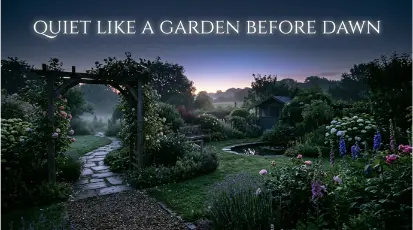
Meaning: Peacefully silent before activity begins.
Detailed Explanation: The moments before sunrise often feel unusually calm. This simile suggests that the silence may soon give way to birdsong and daily activity.
Tone: Hopeful, peaceful, anticipatory
Examples:
- The town was quiet like a garden before dawn.
- The house remained quiet like a garden before dawn.
- The street looked quiet like a garden before dawn.
Silent as an Empty Theater
Meaning: Completely quiet after people have gone.
Detailed Explanation: The contrast between a lively theater and an empty one makes the silence feel dramatic and noticeable.
Tone: Dramatic, nostalgic, lonely
Examples:
- The hall was as silent as an empty theater.
- The school stage looked as silent as an empty theater.
- The auditorium became as silent as an empty theater after the show.
Quiet Like a Snowy Rooftop
Meaning: Soft, peaceful, and untouched.
Detailed Explanation: Fresh snow can cover ordinary sounds and make familiar places appear calm and distant.
Tone: Peaceful, visual, poetic
Examples:
- The neighborhood was quiet like a snowy rooftop.
- The house rested quietly like a snowy rooftop.
- The city looked quiet like a snowy rooftop before sunrise.
Silent as a Secret Garden
Meaning: Quiet, hidden, and private.
Detailed Explanation: A secret garden suggests a secluded place where few people enter. It gives silence a sense of beauty and mystery.
Tone: Mysterious, peaceful, romantic
Examples:
- The courtyard was as silent as a secret garden.
- Her thoughts were as silent as a secret garden.
- The hidden path remained as silent as a secret garden.
Quiet Like a Sleeping Village
Meaning: Calm and free from everyday activity.
Detailed Explanation: A sleeping village creates a warm image of homes resting after the day’s work is finished.
Tone: Peaceful, cozy, nostalgic
Examples:
- The town was quiet like a sleeping village.
- The countryside felt quiet like a sleeping village.
- The street became quiet like a sleeping village after midnight.
Quiet Like the Pause Before Rain
Meaning: Still and full of anticipation.
Detailed Explanation: The atmosphere before rain can become strangely still. This comparison is useful when silence signals that something is about to happen.
Tone: Anticipatory, dramatic, atmospheric
Examples:
- The room was quiet like the pause before rain.
- The town felt quiet like the pause before rain.
- Everyone waited in a silence like the pause before rain.
Silent as a Starless Sky
Meaning: Deep, empty, and mysterious.
Detailed Explanation: A starless sky creates a vast image with little visual activity. Pairing it with silence gives a scene a lonely and mysterious feeling.
Tone: Dark, poetic, mysterious
Examples:
- The night was as silent as a starless sky.
- The valley felt as silent as a starless sky.
- Her loneliness was as silent as a starless sky.
Quiet Like a Page Before the First Word
Meaning: Completely still and full of possibility.
Detailed Explanation: A blank page before writing begins contains no words but holds the potential for an entire story. This makes the comparison ideal for beginnings.
Tone: Hopeful, thoughtful, creative
Examples:
- The classroom was quiet like a page before the first word.
- The morning felt quiet like a page before the first word.
- His new life began quiet like a page before the first word.
Top 10 Similes for Silent
| Simile | Meaning | Tone |
| Silent as a snow-covered forest | Extremely quiet and peaceful | Peaceful, poetic |
| Quiet like a sleeping lake | Calm and completely still | Serene, gentle |
| Silent as an unopened letter | Quiet while hiding something unsaid | Emotional, mysterious |
| Quiet like falling snow | Soft, gentle, and nearly soundless | Peaceful, delicate |
| Silent as a locked room | Completely quiet and isolated | Mysterious, tense |
| Quiet like a sleeping city | Unusually quiet despite normally being busy | Cinematic, reflective |
| Silent as a forgotten chapel | Deeply quiet and solemn | Haunting, reflective |
| Quiet like a garden before dawn | Peaceful silence before activity begins | Hopeful, serene |
| Silent as a breath held back | Quiet because of suspense or nervousness | Dramatic, tense |
| Quiet like a page before the first word | Still and full of possibility | Creative, hopeful |
The best similes for silent do more than replace the word “quiet.” They give silence a shape, mood, texture, and emotional meaning. A peaceful comparison such as “quiet like falling snow” can make a scene feel gentle, while “silent as a locked room” can introduce mystery. Similes are especially useful because they create direct comparisons with familiar images, helping readers understand and visualize an idea quickly.
When choosing a simile, always consider the feeling you want your reader to experience. For peaceful writing, choose images from nature or sleep. For suspense, use closed spaces, darkness, or anticipation. For emotional writing, compare silence with hidden letters, forgotten photographs, or unspoken promises. With the right comparison, even a simple moment of silence can become vivid, meaningful, and memorable.
Conclusion
Quiet moments can express powerful emotions, create suspense, and make a scene more meaningful. Similes for silence help writers describe stillness and quietness through vivid comparisons that allow readers to imagine the atmosphere and feel its mood. From silence as peaceful as falling snow to quietness as mysterious as a locked room, these expressions can bring depth and creativity to your words.
Whether you are writing stories, poems, essays, speeches, or everyday descriptions, the right simile can make your language more engaging and memorable. In this guide, you’ll discover creative examples, simple meanings, and practical tips for choosing comparisons that fit different emotions, settings, and writing styles.
FAQs
What is a simile for silent?
A simile for silent compares something quiet to another familiar thing using words such as “like” or “as.” For example, “The room was as silent as a sleeping library” compares the room’s quietness with the peaceful stillness of a library. Such comparisons help readers visualize silence and understand its emotional or atmospheric effect.
What are some common similes for silent?
Common similes include “silent as a statue,” “quiet like falling snow,” “silent as an empty library,” and “quiet like a sleeping lake.” Each comparison creates a slightly different feeling. Some suggest peace, while others suggest loneliness, mystery, or tension. The best choice depends on the setting, emotion, and overall tone of your writing.
How do similes make silence more interesting?
Similes make silence more interesting by replacing a plain description with a vivid comparison. Saying “the room was silent” gives basic information, while “the room was as silent as a snow-covered forest” creates a stronger mental image. This technique adds atmosphere, emotion, and personality while helping readers experience the scene rather than simply understand it.
Can I use similes for silent in creative writing?
Yes. Similes for silence work especially well in creative writing because they add imagery and emotion to scenes. Writers can use them in stories, poems, novels, scripts, and personal narratives. A peaceful comparison can create calmness, while a darker comparison can build suspense. Choose a comparison that naturally supports the scene rather than forcing one into the text.
What is a good simile for a peaceful silence?
“Quiet like falling snow” is an excellent simile for peaceful silence. It creates an image of softness, stillness, and calm. Other choices include “silent as a winter morning” and “quiet like a sleeping lake.” These comparisons work well when you want readers to feel relaxed, comfortable, reflective, or connected to a peaceful natural setting.
What is a good simile for scary silence?
For scary silence, try “silent as a locked room,” “quiet like a birdless forest,” or “silent as a hidden cave.” These comparisons suggest isolation, uncertainty, and danger. They work particularly well in suspense stories, mystery scenes, and descriptions of abandoned places where the absence of normal sounds makes the setting feel unsettling.
What is a simile for someone who refuses to speak?
A useful simile is “silent as a closed door.” It suggests that someone has deliberately shut others out and does not want to communicate. You could also write “he stood as silent as a statue” when you want to emphasize complete stillness. The right comparison depends on whether the person seems angry, nervous, secretive, or emotionally distant.
Are “silent as” and “quiet like” similes?
Yes, both can introduce similes when they create a direct comparison. For example, “silent as a statue” compares a person’s silence with a statue, while “quiet like falling snow” compares quietness with falling snow. The words “as” and “like” often signal similes, but the phrase must contain an actual comparison rather than simply use one of those words.
How can I create original similes for silent?
Start by thinking about the mood you want to create. Then choose an image that naturally represents that feeling. For peace, consider snow, lakes, gardens, or sleeping places. For mystery, consider locked rooms, hidden caves, or sealed letters. Combine the image with “like” or “as” and make sure the comparison sounds natural and helps readers understand the silence.
What is the difference between a simile and a metaphor for silence?
A simile directly compares two things using words such as “like” or “as.” For example, “The room was as silent as a library” is a simile. A metaphor makes the comparison directly, such as “The room was a library.” Both techniques create imagery, but similes make the comparison more explicit and often easier for beginners to understand.
What makes a good simile for silent?
A good simile creates a clear mental image and matches the mood of the sentence. It should feel natural, easy to understand, and relevant to the situation. Strong similes for silent avoid confusing comparisons and unnecessary complexity. The most effective examples often use familiar images while adding a fresh emotional or descriptive quality to the writing.

