
Similes for dumb can make descriptions of foolishness, poor judgment, or confusion more vivid and memorable. Instead of simply calling someone “ignorant,” a well-crafted simile compares that behavior with something familiar, humorous, or dramatic. This guide explains what similes mean, how they work, and how to use similes for dumb naturally in everyday speech, creative writing, stories, and dialogue. You’ll also find 50 original examples to inspire your writing.
Definition of Similes For Dumb
Similes for dumb compare foolish, unwise, confused, or unintelligent behavior using words like “like” or “as.”
For example, “He was as confused as a compass near a magnet” compares a person’s confusion with a familiar situation.
These expressions can add humor, exaggeration, personality, and imagery to ordinary descriptions.
What Is a Simile?
A simile compares two different things to make an idea easier to picture. Writers usually use like or as to create the comparison.
Example
- She was as confused as a squirrel in a maze.
- He acted like a phone with no signal.
- His plan was as useful as an umbrella underwater.
- The student looked as puzzled as a cat reading a map.
- His decision made as much sense as wearing skis at the beach.
A strong simile does more than compare two objects. It helps readers quickly imagine a feeling, action, personality, or situation.
Why Use Similes For Dumb in Writing?
Using similes for dumb can make writing more colorful and expressive.
- They create vivid images: A creative comparison helps readers picture foolish behavior.
- They add humor: Funny comparisons can soften an insult and make dialogue entertaining.
- They improve storytelling: Similes give characters stronger personalities.
- They avoid repetitive wording: Instead of repeatedly using “dumb” or “foolish,” writers can vary their descriptions.
- They strengthen dialogue: Characters can sound more natural, witty, sarcastic, or playful.
- They make descriptions memorable: An unusual comparison often stays in a reader’s mind.
- They support creative expression: Similes let writers communicate attitude without relying on plain statements.
Types of Similes
Similes for dumb can take several forms. Some create humor, while others create dramatic or poetic effects. Choosing the right type depends on your audience, purpose, and tone.
Humorous Similes
Humorous similes compare foolish behavior with ridiculous or unexpected situations. They work especially well in casual conversations, comedy, social posts, and lighthearted stories.
Example
- He was as confused as a penguin in a desert.
- His plan was like bringing a spoon to a snowball fight.
- She looked as puzzled as a cat at a dog convention.
- His logic was like a broken GPS giving directions to the ocean.
- He acted like a calculator trying to solve a sandwich.
Sarcastic Similes
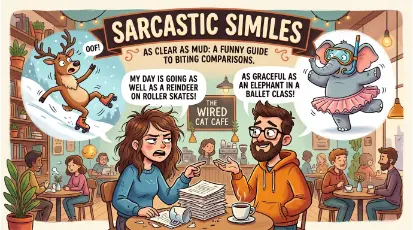
Sarcastic similes use irony to point out poor judgment or questionable decisions. They can sound clever, sharp, or playful depending on how you use them.
Example
- His idea was as brilliant as a candle in a rainstorm.
- He was like a detective searching for clues in his own pocket.
- Her decision made as much sense as locking the door after losing the house.
- His strategy was like bringing a fork to a soup competition.
- He planned things about as well as a fish plans a road trip.
Dramatic and Creative Similes
Dramatic similes exaggerate foolishness to create a stronger emotional or literary effect. Writers can use them in stories, poems, fictional dialogue, and humorous essays.
Example
- His judgment was as fragile as ice under a marching band.
- His thoughts scattered like leaves in a hurricane.
- She looked as lost as a ship without a compass.
- His reasoning was like a bridge built from paper.
- His confidence stood like a tower built on sand.
Writing Tips and Common Mistakes
Useful Tips
- Match the audience: Use gentle comparisons with children or professional readers and stronger humor in casual writing.
- Choose clear images: Readers should understand the comparison quickly.
- Keep the comparison relevant: Connect foolishness with confusion, poor judgment, uselessness, or disorder.
- Avoid tired clichés: Original comparisons usually feel fresher.
- Use exaggeration carefully: A funny exaggeration can work well, but too much can distract readers.
- Match the tone: A playful simile suits comedy, while a darker comparison suits dramatic fiction.
- Respect context: Avoid comparisons that unnecessarily target sensitive personal characteristics.
- Read the sentence aloud: A simile should sound natural when spoken.
- Vary your comparisons: Do not repeat the same image throughout an article or story.
- Prioritize meaning: Make sure readers understand what quality the comparison describes.
Common Mistakes to Avoid
- Using confusing comparisons: “He was like a purple triangle thinking about Tuesday” may sound random rather than meaningful.
- Overexplaining the joke: Let the comparison create the effect naturally.
- Mixing metaphors: Avoid combining unrelated images in one sentence.
- Using offensive comparisons: Humor does not require insulting someone’s identity or background.
- Repeating common clichés: Familiar expressions may lose their impact.
- Making every simile extremely harsh: Gentle humor often works better for everyday communication.
- Ignoring context: A sarcastic simile may not suit a formal report.
- Forcing “like” into every sentence: Use similes when they genuinely improve the description.
50 Similes For Dumb — Main Collection
As Confused as a Squirrel in a Maze
Meaning: This simile describes someone who feels completely confused and cannot figure out what to do.
Detailed Explanation: A squirrel normally moves quickly and confidently through familiar surroundings. Putting it inside a maze creates a funny image of total confusion.
Tone: Humorous, playful
Examples:
- He looked as confused as a squirrel in a maze during the meeting.
- I felt as confused as a squirrel in a maze after reading the instructions.
- She stood there as confused as a squirrel in a maze.
Like a GPS That Forgot the Map
Meaning: This describes someone who cannot find the right direction or make a sensible decision.
Detailed Explanation: A GPS should provide guidance, but one without a map becomes useless. The comparison humorously describes a person who has lost their sense of direction.
Tone: Witty, humorous
Examples:
- He was like a GPS that forgot the map when we asked for directions.
- My friend sounded like a GPS that forgot the map.
- She wandered around like a GPS that forgot the map.
As Useful as an Umbrella Underwater
Meaning: This describes an idea, action, or decision that serves almost no useful purpose.
Detailed Explanation: An umbrella protects people from rain, but water already surrounds someone underwater. The contrast makes the comparison funny and clear.
Tone: Sarcastic, humorous
Examples:
- His plan was as useful as an umbrella underwater.
- That suggestion proved as useful as an umbrella underwater.
- His solution was as useful as an umbrella underwater.
Like a Calculator With No Numbers
Meaning: This describes someone who appears ready to solve a problem but lacks the ability or information to do so.
Detailed Explanation: A calculator needs numbers to perform useful calculations. Without them, it cannot accomplish its main purpose.
Tone: Playful, sarcastic
Examples:
- He looked like a calculator with no numbers during the math test.
- I felt like a calculator with no numbers when they asked me to solve it.
- She acted like a calculator with no numbers.
As Lost as a Tourist Without a Phone
Meaning: This describes someone who has no idea where to go or what to do.
Detailed Explanation: Many travelers rely on phones for maps and information. Losing that guidance can create an amusing sense of helplessness.
Tone: Relatable, humorous
Examples:
- He looked as lost as a tourist without a phone.
- I felt as lost as a tourist without a phone in the huge building.
- She wandered around as lost as a tourist without a phone.
Like a Puzzle With Half the Pieces Missing
Meaning: This describes someone whose thoughts or reasoning seem incomplete.
Detailed Explanation: A puzzle cannot form a complete picture when important pieces disappear. The comparison suggests incomplete thinking or missing information.
Tone: Clever, descriptive
Examples:
- His explanation sounded like a puzzle with half the pieces missing.
- Her argument felt like a puzzle with half the pieces missing.
- His reasoning was like a puzzle with half the pieces missing.
As Logical as a Fish Ordering Pizza
Meaning: This describes reasoning that makes little or no sense.
Detailed Explanation: Fish cannot order pizza, so the image creates an obviously impossible situation. It humorously emphasizes poor logic.
Tone: Absurd, humorous
Examples:
- His argument was as logical as a fish ordering pizza.
- That plan sounds as logical as a fish ordering pizza.
- Her excuse was as logical as a fish ordering pizza.
Like a Dictionary With Every Word Upside Down
Meaning: This describes someone who has access to information but cannot use it properly.
Detailed Explanation: A dictionary should help someone understand words. Turning everything upside down makes that information difficult to use.
Tone: Playful, imaginative
Examples:
- He explained the topic like a dictionary with every word upside down.
- I felt like a dictionary with every word upside down.
- Her notes were like a dictionary with every word upside down.
As Sharp as a Spoon
Meaning: This humorous expression suggests that someone lacks quick thinking or intelligence.
Detailed Explanation: A spoon does not have a sharp edge like a knife. The comparison creates gentle sarcasm by describing someone as the opposite of mentally sharp.
Tone: Sarcastic, lighthearted
Examples:
- He was as sharp as a spoon when the teacher asked the question.
- I felt as sharp as a spoon before my morning coffee.
- His response was as sharp as a spoon.
Like a Doorbell With No Button
Meaning: This describes something that exists but cannot perform its expected function.
Detailed Explanation: A doorbell needs a button to activate it. Without that essential part, it becomes ineffective.
Tone: Witty, humorous
Examples:
- His plan was like a doorbell with no button.
- The strategy felt like a doorbell with no button.
- His solution worked like a doorbell with no button.
As Clueless as a Penguin at a Birthday Party
Meaning: This describes someone who does not understand what is happening.
Detailed Explanation: A penguin would have no natural understanding of a human birthday party, creating an amusing picture of confusion.
Tone: Whimsical, humorous
Examples:
- He looked as clueless as a penguin at a birthday party.
- I felt as clueless as a penguin at a birthday party.
- She stood there as clueless as a penguin at a birthday party.
Like a Map That Points Everywhere
Meaning: This describes unclear guidance or reasoning that gives no definite answer.
Detailed Explanation: A useful map should point travelers toward specific destinations. A map that points everywhere would create more confusion instead of solving the problem.
Tone: Sarcastic, descriptive
Examples:
- His instructions were like a map that points everywhere.
- Her explanation sounded like a map that points everywhere.
- His advice was like a map that points everywhere.
As Prepared as a Snowman at a Summer Picnic
Meaning: This describes someone who is completely unprepared for a situation.
Detailed Explanation: A snowman cannot handle hot summer conditions. The contrast highlights extreme lack of preparation.
Tone: Humorous, exaggerated
Examples:
- He arrived as prepared as a snowman at a summer picnic.
- I was as prepared as a snowman at a summer picnic.
- She looked as prepared as a snowman at a summer picnic.
Like a Clock Without Hands
Meaning: This describes someone who cannot tell what to do or where to go.
Detailed Explanation: A clock without hands cannot clearly show the time. The comparison represents a person who lacks direction or useful guidance.
Tone: Poetic, subtle
Examples:
- He seemed like a clock without hands during the project.
- I felt like a clock without hands after hearing the news.
- Her plan was like a clock without hands.
As Organized as a Tornado’s Desk
Meaning: This describes an extremely disorganized situation or person.
Detailed Explanation: A tornado leaves disorder behind. Comparing a desk to a tornado suggests that everything sits in complete chaos.
Tone: Humorous, exaggerated
Examples:
- His notes were as organized as a tornado’s desk.
- My workspace looked as organized as a tornado’s desk.
- Her thoughts seemed as organized as a tornado’s desk.
Like a Light Bulb With No Electricity
Meaning: This describes something that cannot produce the expected result.
Detailed Explanation: A light bulb needs electricity to shine. Without power, it remains inactive, making it a useful comparison for ineffective thinking or action.
Tone: Clever, playful
Examples:
- His idea was like a light bulb with no electricity.
- He seemed like a light bulb with no electricity during the discussion.
- Her plan worked like a light bulb with no electricity.
As Helpful as a Broken Compass
Meaning: This describes advice or judgment that leads someone in the wrong direction.
Detailed Explanation: A compass should provide direction. A broken compass can send a traveler somewhere completely different.
Tone: Sarcastic, descriptive
Examples:
- His advice was as helpful as a broken compass.
- That instruction proved as helpful as a broken compass.
- His judgment was as helpful as a broken compass.
Like a Chef Who Forgot the Recipe
Meaning: This describes someone who tries to complete a task without knowing the necessary steps.
Detailed Explanation: A chef normally follows a recipe or understands the ingredients. Forgetting the recipe creates a funny picture of uncertainty.
Tone: Humorous, relatable
Examples:
- He looked like a chef who forgot the recipe.
- I felt like a chef who forgot the recipe.
- She approached the project like a chef who forgot the recipe.
As Wise as a Goldfish With a Spreadsheet
Meaning: This describes someone who has little practical understanding of a complicated task.
Detailed Explanation: A goldfish cannot meaningfully use a spreadsheet. The absurd image makes the comparison playful rather than literal.
Tone: Absurd, comic
Examples:
- He handled the budget as wisely as a goldfish with a spreadsheet.
- I felt as wise as a goldfish with a spreadsheet.
- His financial plan was as wise as a goldfish with a spreadsheet.
Like a Keyboard Missing Half Its Keys
Meaning: This describes incomplete thinking or communication.
Detailed Explanation: A keyboard with missing keys cannot provide every character needed for normal typing. The comparison represents incomplete ideas.
Tone: Modern, humorous
Examples:
- His explanation was like a keyboard missing half its keys.
- Her argument felt like a keyboard missing half its keys.
- His answer sounded like a keyboard missing half its keys.
As Focused as a Cat Chasing Five Lasers
Meaning: This describes someone who cannot concentrate because too many things distract them.
Detailed Explanation: Cats often chase moving objects. Five lasers moving in different directions would create extreme distraction.
Tone: Playful, energetic
Examples:
- He was as focused as a cat chasing five lasers.
- I felt as focused as a cat chasing five lasers.
- She studied as focused as a cat chasing five lasers.
Like a Train Without Tracks
Meaning: This describes a person or plan moving forward without proper direction or structure.
Detailed Explanation: A train needs tracks to travel safely and effectively. Without them, it cannot follow a sensible route.
Tone: Dramatic, descriptive
Examples:
- His plan moved like a train without tracks.
- He acted like a train without tracks.
- The discussion became like a train without tracks.
As Thoughtful as a Hammer in a Glass Shop
Meaning: This describes someone who acts without considering the consequences.
Detailed Explanation: A hammer can easily break glass, so using one carelessly in a glass shop would show poor judgment.
Tone: Sarcastic, humorous
Examples:
- His decision was as thoughtful as a hammer in a glass shop.
- He behaved as thoughtfully as a hammer in a glass shop.
- That suggestion was as thoughtful as a hammer in a glass shop.
Like a Detective Looking for Clues in an Empty Notebook
Meaning: This describes someone searching for answers without having useful information.
Detailed Explanation: A detective needs evidence and clues. An empty notebook provides nothing to investigate.
Tone: Witty, imaginative
Examples:
- He searched for answers like a detective looking for clues in an empty notebook.
- I felt like a detective looking for clues in an empty notebook.
- Her research looked like a detective looking for clues in an empty notebook.
As Quick-Witted as a Snail on Vacation
Meaning: This describes someone who responds very slowly or struggles to think quickly.
Detailed Explanation: Snails already move slowly, and the vacation image adds a playful suggestion that there is no hurry at all.
Tone: Gentle, humorous
Examples:
- He was as quick-witted as a snail on vacation.
- I felt as quick-witted as a snail on vacation this morning.
- His response arrived as quickly as a snail on vacation.
Like a Robot Running on Confusion
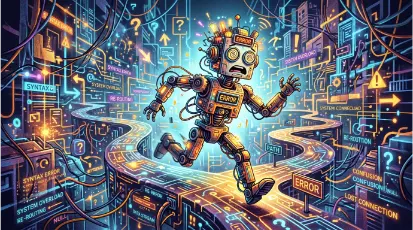
Meaning: This describes someone who continues acting without understanding what they are doing.
Detailed Explanation: A robot normally follows clear instructions. A robot powered by confusion would move without meaningful direction.
Tone: Modern, playful
Examples:
- He walked around like a robot running on confusion.
- I felt like a robot running on confusion.
- She answered questions like a robot running on confusion.
As Sensible as Wearing Flippers to a Mountain Race
Meaning: This describes an impractical decision or poor choice.
Detailed Explanation: Flippers help people move through water, not across mountains. The mismatch creates an obvious picture of bad judgment.
Tone: Humorous, sarcastic
Examples:
- His plan was as sensible as wearing flippers to a mountain race.
- That decision was as sensible as wearing flippers to a mountain race.
- He arrived as sensibly dressed as someone wearing flippers to a mountain race.
Like a Book With All the Pages Stuck Together
Meaning: This describes someone who has potential information but cannot access or use it properly.
Detailed Explanation: A book becomes useless when readers cannot turn its pages. The comparison suggests blocked understanding.
Tone: Poetic, thoughtful
Examples:
- His reasoning was like a book with all the pages stuck together.
- Her explanation felt like a book with all the pages stuck together.
- His thoughts seemed like a book with all the pages stuck together.
Top 10 Similes For Dumb
| Simile | Meaning | Tone |
| As Sharp as a Spoon | Suggests someone lacks mental sharpness. | Sarcastic, humorous |
| Like a GPS That Forgot the Map | Describes someone without direction or useful guidance. | Witty, humorous |
| As Useful as an Umbrella Underwater | Describes something completely ineffective. | Sarcastic |
| Like a Puzzle With Half the Pieces Missing | Describes incomplete reasoning or understanding. | Clever, descriptive |
| As Logical as a Fish Ordering Pizza | Describes reasoning that makes no sense. | Absurd, humorous |
| Like a Bicycle With Square Wheels | Describes an unnecessarily ineffective method. | Clever, humorous |
| As Helpful as a Broken Compass | Describes advice that fails to provide useful direction. | Sarcastic, descriptive |
| Like a Chef Who Forgot the Recipe | Describes someone attempting a task without knowing the necessary steps. | Humorous, relatable |
| As Organized as a Tornado’s Desk | Describes extreme disorder or confusion. | Exaggerated, humorous |
| Like a Lighthouse With No Light | Describes someone or something that should guide others but cannot. | Poetic, dramatic |
Final Thoughts on Similes For Dumb
Creative similes for dumb give writers a more expressive way to describe foolish decisions, confusion, poor judgment, and ineffective ideas. Instead of repeating simple words such as “dumb,” “silly,” or “foolish,” you can create memorable comparisons that make your writing more vivid. The best similes fit the situation, match the intended tone, and communicate their meaning clearly.
Humorous comparisons work well in casual conversations and comedy, while poetic or dramatic comparisons can add depth to stories and creative writing. When you create your own similes for dumb, focus on originality, clarity, and audience. A clever comparison should entertain or clarify rather than simply insult. With the examples in this guide, you have plenty of inspiration for making everyday descriptions more colorful, engaging, and memorable.
Conclusion
Similes for dumb give writers a creative and memorable way to describe foolish decisions, confusion, poor judgment, or ineffective ideas without relying on the same basic words again and again. A clever comparison can make your writing funnier, more vivid, and easier for readers to remember. Whether you are writing a story, creating humorous dialogue, preparing a social media post, or simply looking for a witty way to describe a silly situation, the right simile can add personality and energy.
Expressions such as “as sharp as a spoon” or “like a GPS that forgot the map” turn ordinary descriptions into colorful images. The key is to choose comparisons that match your audience and purpose. Keep them clear, original, and playful when appropriate. With these similes for dumb, you can make your conversations and creative writing more expressive while keeping the language natural, engaging, and family-friendly.
FAQs
What are similes for dumb?
Similes for dumb are creative comparisons that describe foolishness, confusion, poor judgment, or ineffective thinking. They commonly use words such as “like” or “as” to connect two different ideas. For example, “as sharp as a spoon” humorously suggests that someone is not mentally sharp. These expressions make descriptions more colorful, memorable, and entertaining.
What is a simple example of a simile for dumb?
A simple example is “as sharp as a spoon.” This humorous simile compares someone’s thinking ability to a spoon, which is not sharp. Other examples include “like a GPS that forgot the map” and “as useful as an umbrella underwater.” These comparisons communicate foolishness through humor rather than using a plain insult.
Why use similes for dumb in writing?
Using similes for dumb makes writing more vivid and expressive. Instead of repeatedly using words such as “dumb,” “silly,” or “foolish,” writers can create fresh comparisons that readers can easily picture. Similes also add humor, personality, and emotion to dialogue, stories, descriptions, captions, and other forms of informal or creative writing.
Are similes for dumb appropriate for children?
Yes, many similes for dumb can work well for children when they remain playful and harmless. Comparisons involving animals, objects, food, or funny situations can describe silly behavior without becoming cruel. For example, “as confused as a squirrel in a maze” creates a funny image while avoiding offensive or inappropriate language.
Can similes for dumb be funny?
Yes, humorous comparisons are one of the most effective ways to describe foolish behavior. A phrase such as “as logical as a fish ordering pizza” creates an obviously impossible image, which makes the expression entertaining. The funniest similes usually combine a familiar situation with an unexpected comparison while keeping the meaning easy to understand.
What makes a good simile for dumb?
A good simile should be clear, creative, relevant, and easy to visualize. It should communicate the intended idea without requiring a long explanation. Strong examples often compare foolishness with something obviously ineffective or confused, such as “like a bicycle with square wheels.” The best choices also match the tone and audience of the writing.
Are similes for dumb the same as insults?
Not necessarily. A simile can describe foolish behavior without directly attacking a person’s character. For example, “his plan was as useful as an umbrella underwater” criticizes the plan rather than the person. Using playful comparisons can make language gentler and more humorous, especially when the goal is entertainment rather than personal criticism.
Can I use similes for dumb in creative writing?
Absolutely. Similes for dumb work particularly well in creative writing because they help readers visualize characters and situations. Writers can use them in dialogue, narration, comedy, fiction, poems, and humorous descriptions. A well-chosen comparison can reveal a character’s personality while making the scene more lively and memorable.
What are some gentle alternatives to say someone is dumb?
Instead of directly calling someone dumb, you can use softer expressions such as “confused,” “misguided,” “unprepared,” or “not thinking clearly.” You can also use a playful simile like “as lost as a tourist without a phone.” These alternatives can communicate the same general idea while sounding less harsh and more conversational.
How can I create my own similes for dumb?
Start by identifying the quality you want to describe, such as confusion, poor judgment, slowness, or uselessness. Then choose a familiar object or situation that strongly represents that quality. Connect the ideas with “like” or “as.” For example, someone lacking direction might be described as “like a compass spinning in a magnet factory.”

